
Thrift Sourcing
How to Tell if a Thrift Store Find Is Worth Reselling
Learn how to decide whether a thrift store find is worth reselling by checking sold comps, condition, demand, shipping risk, and profit before you buy.
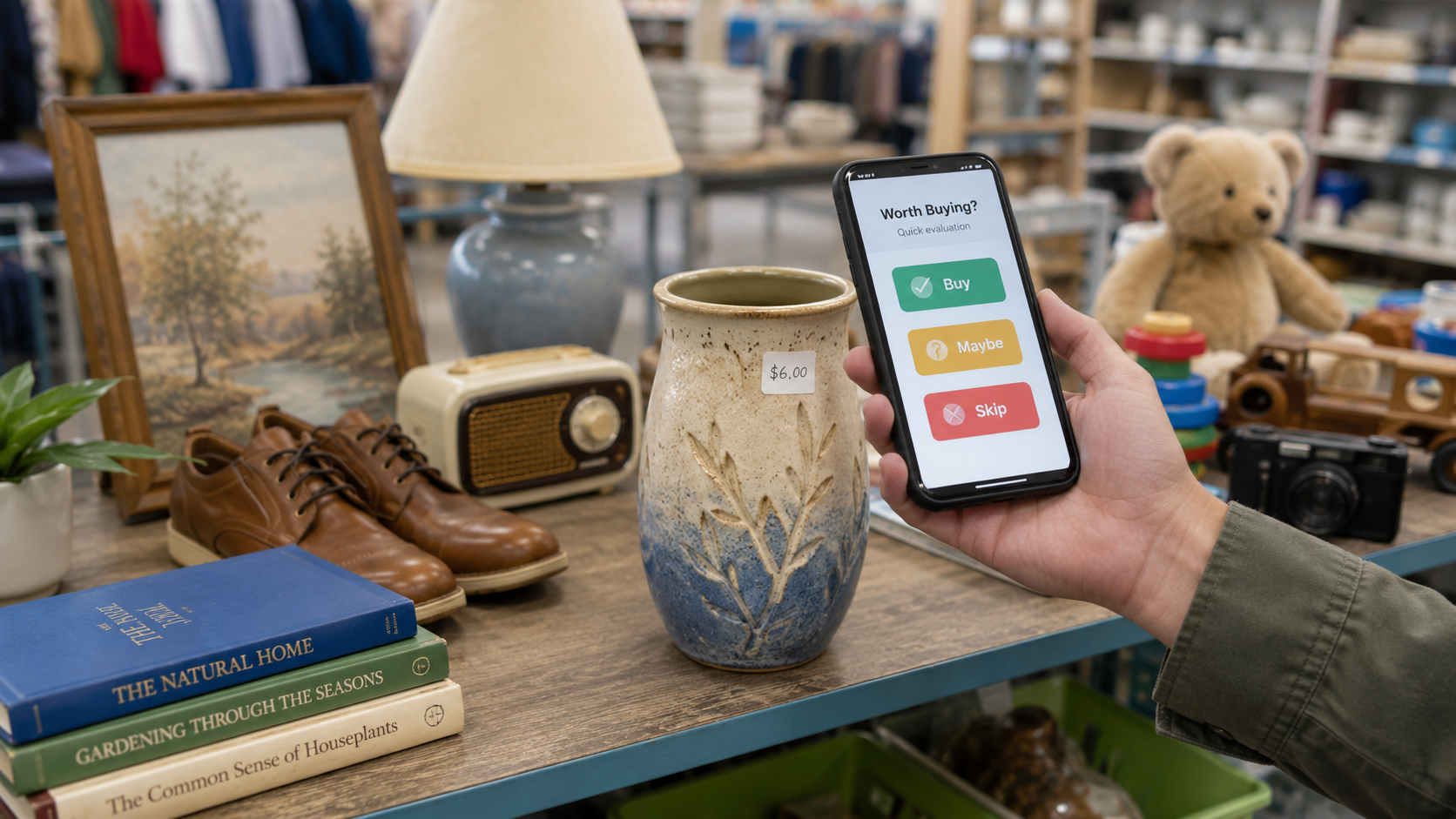
Some thrift finds look profitable the second you see them: a vintage lamp, clean sneakers, a sealed board game, or a strange ceramic piece that feels too unique to leave behind.
The hard part is not finding interesting items. The hard part is deciding whether the item is actually worth buying before it ends up in your cart, your death pile, or your garage.
Identify the item before checking prices
Start with the details that make the item specific. Better identification leads to better comps.
- Brand
- Model number
- Style code
- Size
- Material
- Maker mark
- UPC or barcode
- ISBN
- Set number
- Pattern name
- Country of origin
Check sold comps, not active listings
An active listing only tells you what someone is asking. It does not prove that a buyer is willing to pay it.
Look for sold items that match the same brand, model, size, condition, and completeness. One sold result can be interesting, but three to five relevant sold results are much stronger.
Watch for outliers. If one item sold for $80 but most similar items sold for $18, the $80 sale may not represent the real market.
Check condition before you get excited
Condition can turn a good item into a pass. The category matters, so look for flaws that change what a buyer will actually pay.
- Cracks, chips, stains, odor, or missing parts
- Scratches, warping, corrosion, or broken hardware
- Smoke smell, mildew smell, peeling logos, or damaged packaging
Think about shipping before you buy
Some items look profitable until you remember shipping. Heavy, fragile, oversized, or awkward items need extra caution.
- Is it heavy, fragile, oversized, or hard to pack?
- Could it break in transit?
- Will shipping make the listing less attractive?
This matters especially for lamps, framed art, dishes, cast iron, board games, bulky toys, and vintage homegoods.
Estimate profit, not revenue
Revenue is the sale price. Profit is what remains after costs.
Decision framework
Use a buy, maybe, or skip mindset
Clear identity, relevant sold comps, manageable condition, realistic profit, and acceptable shipping risk.
Potential is there, but something needs more checking: brand, condition, sold evidence, or buy price.
Evidence is weak, condition is poor, shipping is risky, or the profit does not justify the work.
Final takeaway
A thrift store find is worth reselling when the evidence supports the decision.
- Not because it looks old.
- Not because someone listed one for a high price.
- Not because it feels rare.
- Not because you hope the right buyer exists.
The best flips usually have clear identity, real sold evidence, manageable condition, reasonable shipping, and enough profit to justify the work.
Use evidence before you buy
Make better sourcing decisions with FlypSense.
FlypSense helps resellers make better buy, maybe, or skip decisions before they spend money. Scan thrift and estate-sale finds, review resale signals, check marketplace evidence, and spot risk before the item ends up in your cart.
Request Beta Access