
Estate Sale Finds
What to Check Before Buying Vintage Homegoods to Resell
Vintage homegoods resale can be profitable, but only when maker marks, condition, sold comps, shipping risk, and profit all support the buy.
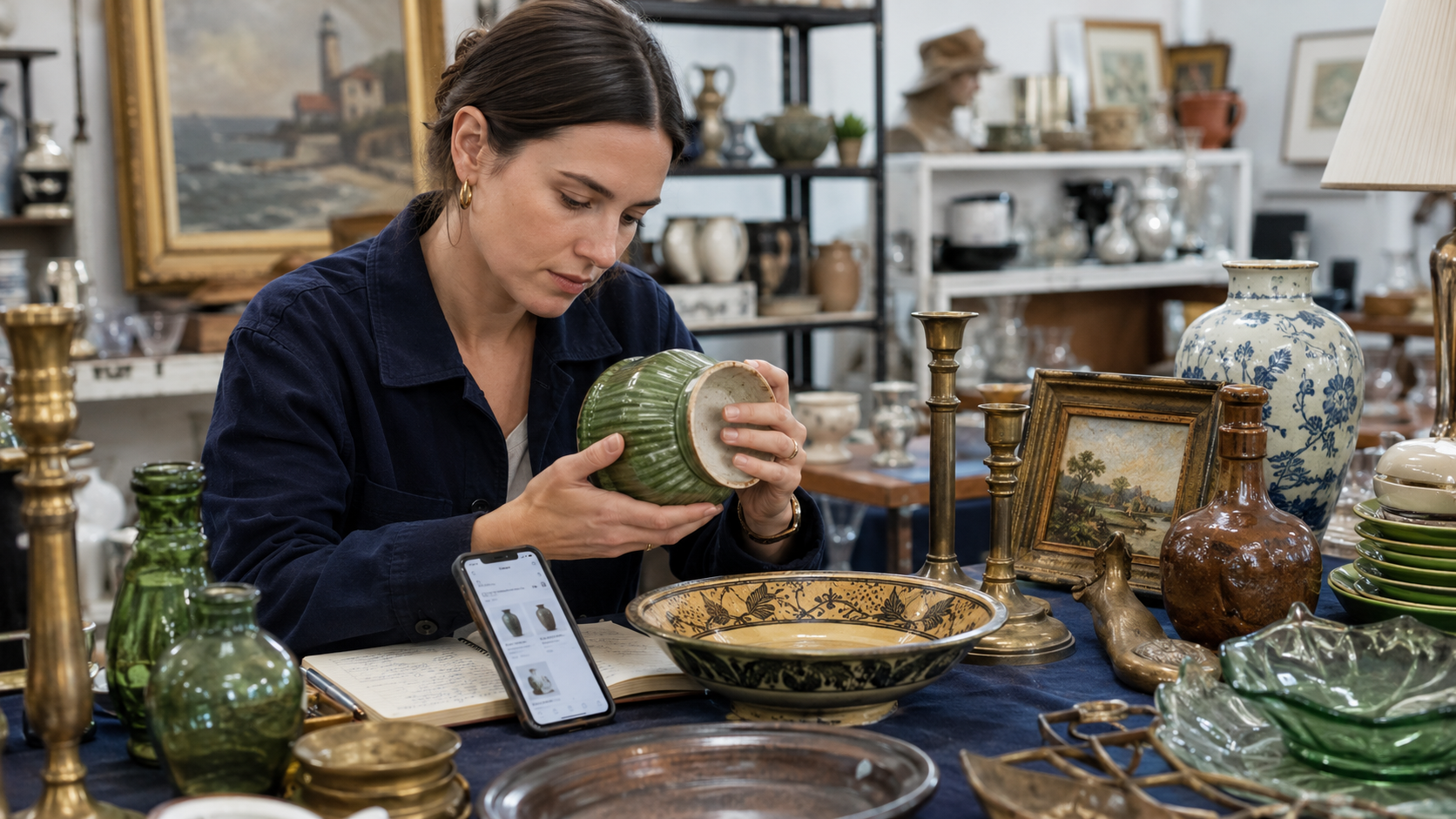
Vintage homegoods resale can be one of the best parts of thrift and estate-sale sourcing, but it is also one of the easiest places to overpay.
A lamp, vase, brass piece, framed print, or old kitchen item can look valuable because it feels vintage. That does not mean it has real resale demand.
Before you buy, slow down and check the evidence that actually changes the decision.
Vintage homegoods resale starts with identity
Homegoods can be difficult because many items look similar. A generic ceramic vase, brass figurine, or glass dish may look special without having enough identifying evidence to support a strong buy.
Before checking prices, look for details that make the item specific.
- Maker mark
- Backstamp
- Pattern name
- Artist signature
- Model number
- Country of origin
- Material
- Size
- Age clues
- Original label
Check the underside, back, base, and edges
The most important resale clues are often not on the front of the item. For vintage homegoods, the underside, back, base, rim, or inside edge may tell you more than the decorative side.
- Flip ceramics, dishes, and figurines over to check the base.
- Look behind framed art for labels, signatures, dates, or gallery marks.
- Check lamp bases for maker labels, model numbers, and wiring condition.
- Inspect cast iron for raised marks, logos, heat rings, and size numbers.
- Look for stickers, etched signatures, or engraved markings on glass and metal.
If you cannot find any identifying details, the item may still be worth buying, but the decision should be more cautious.
Condition matters more than it seems
Small condition problems can change the value of vintage homegoods quickly. A chip, crack, stain, missing lid, or repair can turn a good-looking item into a pass.
- Chips on rims, corners, handles, or feet
- Hairline cracks or crazing
- Old repairs, glue marks, or repainting
- Missing lids, cords, shades, parts, or matching pieces
- Odor, smoke, water damage, or mildew
- Scratches, pitting, dents, or corrosion
Look for sold comps that are truly similar
Vintage homegoods are especially vulnerable to bad comps because many items share the same broad style. Similar-looking does not always mean comparable.
When checking sold comps, try to match:
- Same maker
- Same pattern
- Same size
- Same material
- Same condition
- Same colorway
- Same era
- Same completeness
A sold comp for a signed designer piece does not prove value for an unsigned generic version. A sold set does not prove value for a single missing piece.
Do not ignore shipping risk
Homegoods can look profitable until you think through shipping. Heavy, fragile, awkward, or oversized items take more time and create more risk.
- Will it need double boxing?
- Is it fragile enough to break in transit?
- Will shipping make the listing unattractive?
- Do you have the right packing material?
- Can the expected profit survive the shipping cost?
Check whether the style actually has demand
Old does not always mean desirable. Rare does not always mean valuable. Some vintage homegoods are rare because nobody is looking for them.
Look for signs that real buyers care:
- Multiple recent sold comps
- Recognizable maker or collectible category
- Consistent buyer interest across marketplaces
- Strong visual appeal for home decor
- Replacement demand for sets or patterns
If demand is unclear, treat the item as a maybe unless the buy price is low enough to justify the risk.
Estimate profit before the item goes in your cart
For vintage homegoods resale, profit depends on more than the expected sale price.
Homegoods sourcing framework
Use a buy, maybe, or skip decision
Readable maker or strong style, clean condition, relevant sold comps, manageable shipping, and realistic profit.
Interesting item, but identity is unclear, comps are mixed, condition needs checking, or shipping risk is uncertain.
Weak evidence, major damage, no sold comps, high shipping risk, or profit too thin for the work involved.
Final takeaway
Vintage homegoods resale works best when the item has more than just “old” or “interesting” going for it.
- Check the underside, back, base, and edges.
- Look for maker marks, signatures, pattern names, and labels.
- Compare only to truly similar sold comps.
- Take condition and shipping seriously.
- Make the decision based on realistic profit, not hope.
A good vintage homegoods flip has clear evidence, manageable risk, and enough demand to justify the buy.
Use evidence before you buy
Make better sourcing decisions with FlypSense.
FlypSense helps resellers make better buy, maybe, or skip decisions before they spend money. Scan thrift and estate-sale finds, review resale signals, check marketplace evidence, and spot risk before the item ends up in your cart.
Request Beta AccessKeep learning
Explore more evidence-based resale education in the FlypSense Resale Guides, or return to the FlypSense homepage.